
The Introduction
In my 21 years of experience, I’ve seen the internet evolve from the crackling sound of a dial-up modem to the lightning-fast 5G speeds we use in our [iPhone 18 Pro and Pixel 11 Pro Fold].
While many people are still getting used to 5G, the tech world is already looking ahead to 6G. It’s not just about faster downloads; it’s about a world where the ‘technological advantage’ of connectivity is integrated into our environment. In this guide, I’ll explain what 6G technology is and why it’s important for the next decade.
1. Speed and Latency: The Terahertz Leap
6G is expected to operate in the terahertz (THz) frequency band.
- The Difference: While 5G offers speeds up to 10 Gbps, 6G aims for 1 Tbps (1 terabit per second). This is 100 times faster than the best fiber-optic connections discussed in [Ultimate Tech Setup Guide].
2. AI-Native Networks
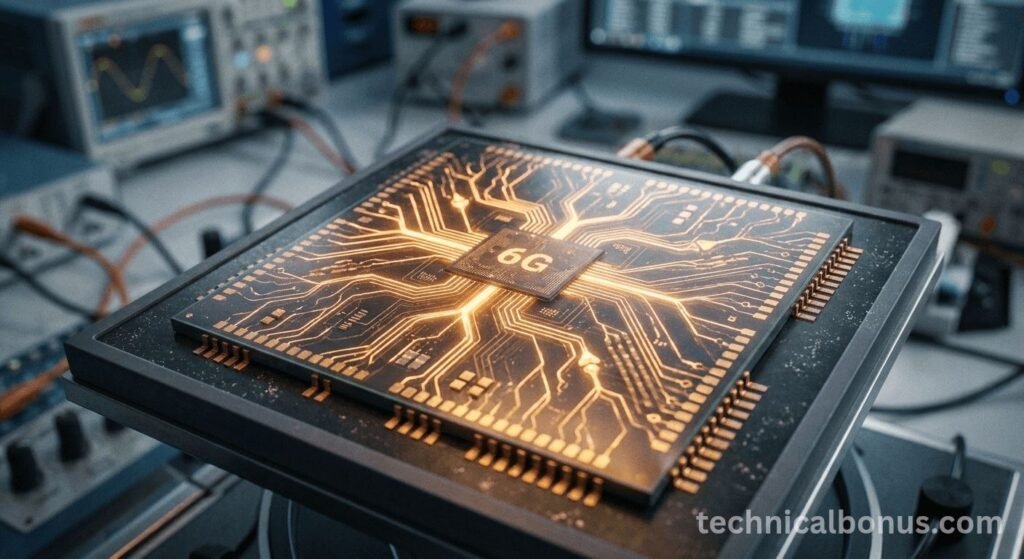
Furthermore, unlike previous generations, 6G is being built with artificial intelligence at its core.
- Technical Detail: It will use AI to predict network traffic patterns and optimize power consumption. This is in line with the efficiency goals of the [2nm processor technology] found in modern flagships.
3. Holographic Communication
With the massive bandwidth of 6G, real-time 3D holographic meetings will be possible.
- The Impact: This will change the way we use [AI productivity tools]. Imagine if Otter.AI’s summary wasn’t just text, but a 3D replay of your technical briefing.
4. The Role of Satellite Integration
Additionally, 6G will bridge the gap between terrestrial towers and satellite systems.
- Technical Detail: This ensures that even tech professionals in remote areas of India can stay connected through the same satellite-based 5G/6G services that are emerging today.
| Feature | 4G (LTE) | 5G (Current) | 6G (The Future) |
| Peak Speed | 100 Mbps | 10-20 Gbps | 1 Tbps |
| Latency | 50ms | 1-5ms | < 1ms |
| Main Use Case | Video Streaming | IoT & 4K Video | Holograms & AI |
| Frequency | Sub-6 GHz | Millimeter Wave | Terahertz (THz) |
FAQ: Understanding 6G Technology
When will 6G be available in India?
Commercial 6G rollout is expected to begin around 2028-2030, although large-scale testing could begin as early as 2026.
Is 6G safe?
Yes. 6G follows the same international safety standards as 5G, and uses higher frequencies that don’t penetrate the skin.
Conclusion
Ultimately, 6G is the final step to a fully automated, artificial intelligence-driven world. By staying informed about these trends, you ensure your “Technical Bonus” remains relevant as the world adapts.
Disclaimer: This article analyzes 6G technology based on current industry trends and technical white papers for 2026. Since 6G is still in the development and standardization phase, final specifications, speeds, and rollout dates may change. The expert insights shared here are based on my 21 years of experience and are not financial or investment advice regarding telecom stocks.
