
Introduction
Having closely observed India’s digital journey for 21 years, I have seen our country grow from a slow 2G market to becoming the world’s fastest-growing 5G market. As we head towards 2027, the “Technical Bonus” for Indian users is no longer just about coverage; it’s about the transition to 6G technology.
While we recently analyzed the global impact of [6G Technology Explained], the Indian context is unique. Because of the advanced modems in the [Upcoming iPhone 18 Pro] and [Google Pixel 11 Pro Fold], our local infrastructure will also have to keep up with it. In this guide, I will analyze in detail the 5 major changes coming to Indian connectivity.
1. The Rise of 5G Advanced (5.5G)
Before reaching 6G, India will implement 5G Advanced.
- The Shift: Telecom companies like Jio and Airtel are upgrading their systems to support 10Gbps speed. Furthermore, it will allow for better “Network Slicing,” which is essential for the AI tools discussed in our [AI Productivity Guide].
2. The Bharat 6G Alliance and R&D
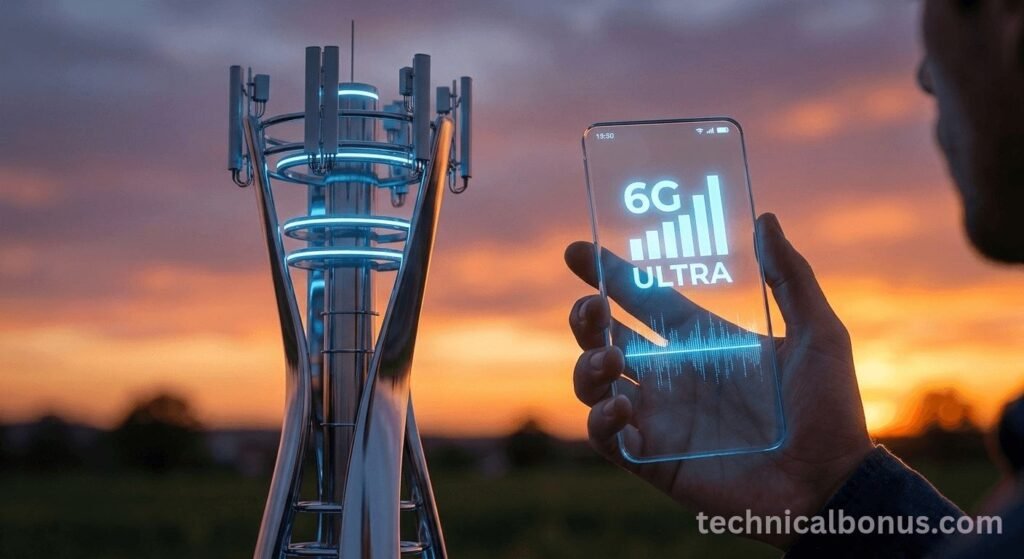
India is no longer waiting for global standards; we are creating them ourselves.
- Specifically: The India 6G Alliance is working on indigenous patents. We expect the first large-scale technology trials to begin in cities like Bengaluru and Hyderabad by 2027.
3. Satellite and Terrestrial Integration
As discussed in [Ultimate Technical Home Office Setup], connectivity is now a basic utility.
- The Change: India will see a “Hybrid” model from 2027. Where 5G towers cannot reach, JioSpaceFiber and Starlink will provide high-speed backup, ensuring 100% uptime for tech professionals.
4. AI-Managed Network Infrastructure
Furthermore, the Indian 6G roadmap includes AI at the core of the network.
- The Impact: This means fewer dropped calls and better battery life on our [2nm processor devices], as the network uses AI to reduce the power consumption of your phone’s modem.
5. Hardened Security for 6G Nodes
Higher speeds bring with them higher risks. According to my [2026 Cybersecurity Guide], India is investing heavily in “Quantum-Safe” encryption for its 6G backbone.
- The Result: This will provide Indian users with an additional layer of protection against AI-based phishing threats emerging today.
| Era | Primary Speed | Main Technology | Status In 2027 |
| 2022-2024 | 100-500 Mbps | 5G Rollout | Standard |
| 2025-2026 | 1-2 Gbps | 5G Advanced | High-End |
| 2027+ | 10 Gbps – 1 Tbps | 6G Trials | Emerging |
Conclusion: India’s Technical Bonus
Finally, India is no longer a follower in the telecom sector; we are becoming a leader. By 2027, the integration of 5G advanced, satellite technology and early 6G trials will provide a strong platform for the next generation of Indian innovators.
Disclaimer:
The analysis is based on the Department of Telecommunications (DoT) roadmap and the India 6G Alliance white papers till August 2026. Final implementation dates and pace may vary depending on government policies and spectrum auctions. Expert opinions are based on 21 years of technical experience.
