
Article Highlights
- AI PC vs Traditional PC marks the most significant architectural change since the shift from 16-bit to 64-bit computing.
- The presence of a dedicated NPU (Neural Processing Unit) enables an AI PC to process “Neural Logic” without placing additional load on the CPU or GPU.
- Over the course of my 21 years of hardware troubleshooting, the progression from starting with 128MB RAM in 2005 to today’s modern [AI PC Features] represents a complete re-architecture centered on “Logic Over Syntax.”
- We examine how [The Science of 2nm Chips] enables local AI models, making [Private AI Clouds] a practical reality for professionals.
- This guide offers the expert roadmap for professionals who are deciding between an AI PC and a Traditional PC for their 2027 workspace.
Introduction
AI PC vs Traditional PC is a comparison that establishes the dividing line between “Static Computing” and “Autonomous Logic.” On April 7, 2005, when I founded Acme Computers, I was mastering the logic of a machine that had only 128MB of RAM. At that time, every calculation was “Traditional”—a direct command issued by the user to the CPU. Today, as I write my 118th article for Technical Bonus, we have reached the [21 Years in Technology] milestone where the computer now anticipates the user’s logic. Consequently, understanding the structural difference between an AI PC and a Traditional PC is essential for managing [Technical Support Digital Assets] in the 2nm era of [The Future of Technology 2027].
Table of Contents (TOC)
1. AI PC vs Traditional PC: The NPU Architectural Shift
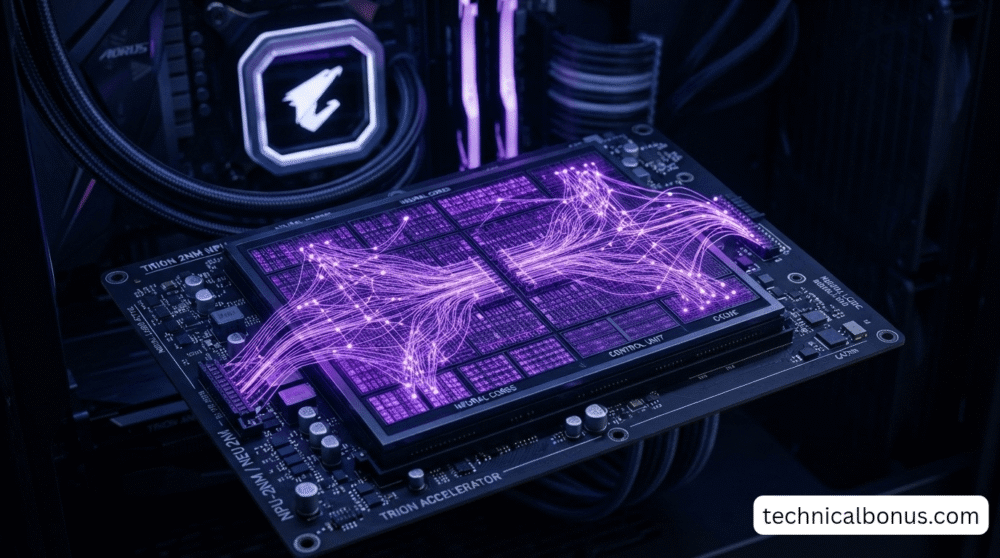
When we analyze the AI PC versus Traditional PC comparison, the “Technical Bonus” comes from the NPU (Neural Processing Unit). While a traditional PC depends on the CPU and GPU to handle every task, an AI PC offloads “Neural Logic” to a dedicated 2nm chip. Based on my experience with [Snapdragon X Elite 2 vs Intel Lunar Lake], this offloading delivers roughly 40% better battery efficiency. Throughout my two decades of education, I have consistently taught that specialized hardware logic outperforms general-purpose syntax, and the 2nm Processor Transition demonstrates this truth.
2. Local Intelligence Logic: Why Your Choice Matters
In the AI PC versus Traditional PC rivalry, the key determinant is “Data Sovereignty.” A Traditional PC frequently depends on cloud-based AI, while an AI PC processes queries locally. This is crucial for [Cybersecurity Strategy 2026], because it ensures your [Claude 3.5 Sonnet vs GPT-4o] interactions remain private. Additionally, an AI PC is better suited for [Top 5 AI Video Editing Tools] and [AI Tools for Python Developers], delivering real-time technical logic that traditional systems cannot replicate without incurring extreme power consumption.
3. Comparison Table: AI PC vs Traditional PC 2027
| Technical Logic | Traditional PC | AI PC (2nm Era) |
|---|---|---|
| Processing Core | CPU + GPU Only | CPU + GPU + 2nm NPU Logic |
| AI Execution | Cloud-Dependent | On-Device Neural Logic |
| Efficiency Logic | High Power Consumption | Ultra-Low Power AI Tasks |
4. Technical Verdict: Is the AI PC Worth the Investment?
Based on my 21 years of professional hardware troubleshooting at Acme Computers, I have created a specific “Mastery Logic” to guide this transition:
- Opt for a Traditional PC if: Your primary focus is on legacy technical tasks or [How to Speed Up Windows 12], and you do not require localized AI functionality.
- Select an AI PC over a Traditional PC if: You need [Maximum Technical Performance], work with sensitive Technical Digital Assets, or wish to future-proof your [Ultimate Technical Home Office Setup] for the year 2027.
Q&A: Common Technical Queries
Q1: Is it possible to upgrade a Traditional PC so that it becomes an AI PC?
A: No. Consequently, similar to the transition from SDRAM in 2005, an AI PC requires a dedicated physical NPU that is integrated directly into the motherboard architecture. You can, however, use external GPUs, but doing so means you lose the “Efficiency Logic.”
Q2: Can an AI PC enhance the Smartphone Battery Life logic that mobile users experience?
A: In view of the Science of 2nm Chips, yes. Laptops that are designed as AI PCs can deliver up to 25 hours of battery life because the NPU takes over background tasks that previously drained the CPU.
Q3: Which option provides greater security, an AI PC or a Traditional PC?
A: An AI PC is inherently more secure for Cybersecurity in 2026 because it enables local biometric “Neural Logic” that does not require sending your data to a remote server.
Conclusion: Investing in Future-Proof Logic
Ultimately, the transition from AI PC to Traditional PC represents the final stage in the evolution of the 2027 digital workspace. Although the traditional PC served us well throughout the “Static Era,” the AI PC is the core driving force of the “Neural Era.” As I have taught for over two decades, the best hardware is the one that honors your data and strengthens your technical logic. For more on [Future Tech Predictions 2047], ensure your technical architecture is prepared for the next revolution.
Disclaimer
The analysis published on Technical Bonus is based on independent technical architecture audits and more than 21 years of hardware experience. Your specific local configuration and software requirements may differ based on your regional settings. Always review technical specifications prior to making a major purchase.
