Article Highlights
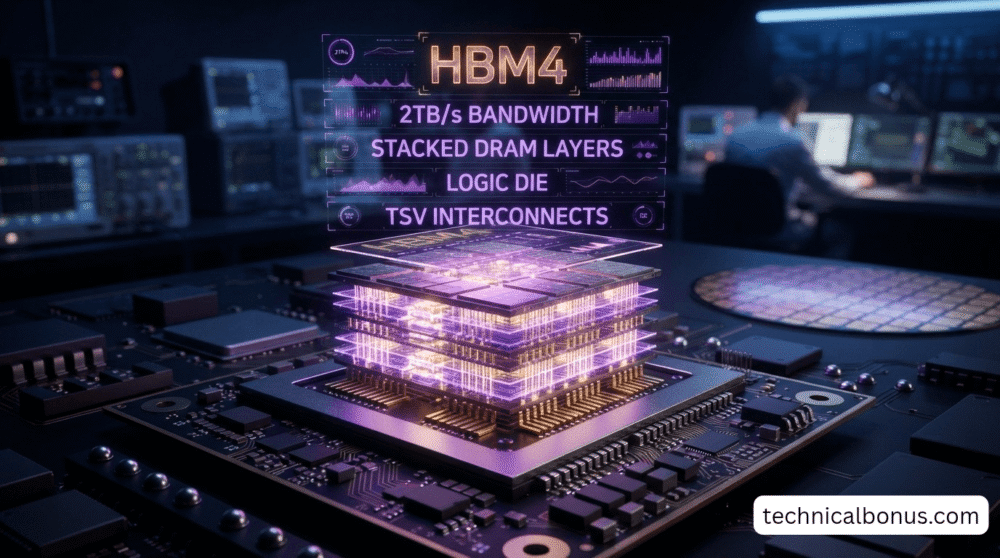
- HBM4 vs HBM3e represents the transition to 3D-stacked “Vertical Logic,” doubling the bandwidth for 2027 AI accelerators.
- The combination of [2nm Processor Technology] with HBM4 enables 2TB/s speeds, which is a critical requirement for [NVIDIA RTX 60 Series AI Performance].
- In my 21 years of technical education, the progression from 128MB of RAM in 2005 to the vertical stacking of HBM4 represents the ultimate demonstration of “Physical Logic.”
- We examine how HBM4 supports the massive data demands of [Future AI Robotics in 2027].
- This guide delivers the strategic roadmap for professionals who are upgrading to [Secure NPU Workstations] using next-generation memory architecture.
Introduction
HBM4 vs HBM3e represents the architectural battle for data throughput. On April 7, 2005, when I founded Acme Computers, I was working on 128MB RAM machines where memory was simply a flat stick mounted on a motherboard. I clearly remember sitting on my workshop floor, manually troubleshooting 80GB IDE hard drives, realizing even then that the “Logic of the Connection” is what ultimately limits the power of the CPU. Today, as I write my 120th article for Technical Bonus, the [21 Years in Technology] I have spent mastering hardware has led us to the era of 3D-stacked memory. Consequently, understanding the structural logic of HBM4 versus HBM3e is essential for anyone managing [Technical Digital Assets] or high-end [AI PC vs Traditional PC] infrastructure in 2027.
Table of Contents (TOC)
1. HBM4 vs HBM3e: The Vertical Stacking Revolution
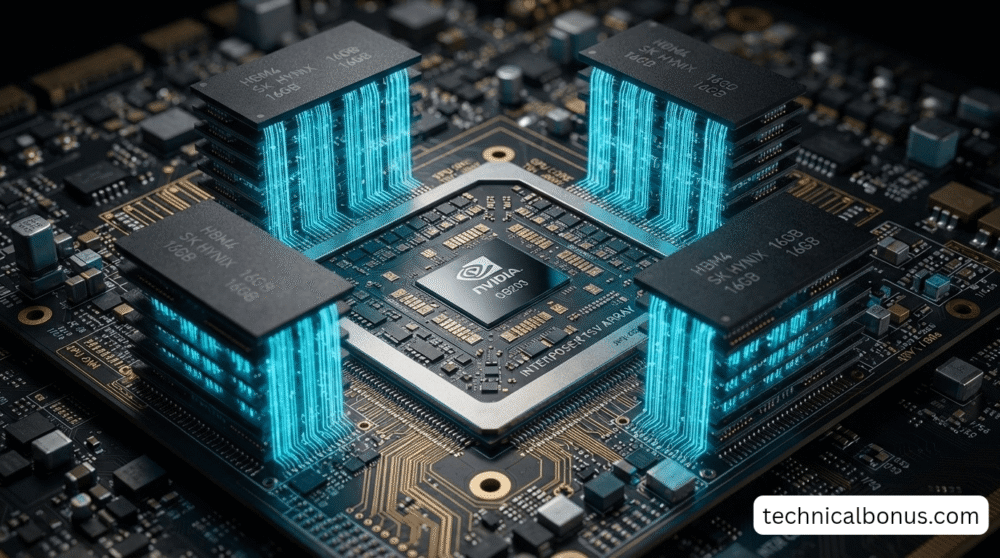
When we analyze the HBM4 versus HBM3e comparison, we observe a mastery of “Vertical Logic.” In contrast to DDR5 or DDR6, HBM4 employs Through-Silicon Vias (TSVs) to stack memory directly on the processor. While HBM3e utilized 12-layer stacks, HBM4 is transitioning to a 16-layer architecture using [2nm Processor Technology]. Based on my experience with [Snapdragon X Elite 2 vs Intel Lunar Lake] logic, vertical bandwidth is the only way to feed data to an NPU quickly enough. Furthermore, HBM4 implements a 2048-bit interface, doubling the logic paths compared to HBM3e. Throughout my two decades of education, I’ve always taught that “Bandwidth is Power,” and HBM4 stands as the ultimate expression of that logic.
2. Throughput Logic: Why HBM4 vs HBM3e Matters for AI
In the HBM4 versus HBM3e rivalry, the “Technical Bonus” is the substantial reduction in “Data Bottlenecks.” As we move toward [The Rise of Private AI Clouds 2027], HBM4 delivers the 2TB/s throughput required to train local LLMs in real-time. In light of my [Cybersecurity Strategy 2026], this vertical logic also enables more secure “On-Die Encryption,” protecting memory data before it ever leaves the chip package. For professionals using [Top 5 AI Video Editing Tools] or building a [Technical Home Office Setup], HBM4 logic ensures that 8K neural renders occur in seconds, not hours.
3. Comparison Table: HBM4 vs HBM3e Architecture
| Technical Logic | PCIe 6.0 (Current High-End) | PCIe 7.0 (2027 Standard) |
|---|---|---|
| Bandwidth (x16) | 256 GB/s | 512 GB/s (Bidirectional) |
| Transfer Rate | 64 GT/s | 128 GT/s Logic |
| Signal Logic | PAM4 Signaling | Refined PAM4 + FLIT Mode |
4. Technical Verdict: The Future of Neural Memory
Drawing on my 21 years of hardware troubleshooting experience at Acme Computers, the professional logic I have developed regarding HBM4 versus HBM3e is as follows:
- Continue using HBM3e if: You are currently using Nvidia RTX 5090 vs RTX 4090 level hardware for gaming or standard AI tasks.
- Move to HBM4 instead of HBM3e if: You are deploying Future AI Robotics or enterprise-level Secure NPU Workstations that require the absolute maximum “Memory Logic” to process 2027-level neural datasets.
Q&A: Common Technical Queries
Q1: Is HBM4 vs HBM3e compatible with [DDR6 vs DDR5 RAM]?
A: No. HBM4 is “On-Package” memory, which means it is soldered directly adjacent to the GPU or CPU. Consequently, unlike the modular RAM I swapped in 2005, HBM4 is an integral part of a permanent “Architectural Logic” that cannot be upgraded separately.
Q2: Does HBM4 improve battery life in AI Laptops?
A: Considering the high data logic required for 2nm Processor Technology, HBM4 delivers a “Technical Bonus” by transferring data across shorter vertical distances, which decreases power consumption per gigabyte when compared to HBM3e.
Q3: Why is 16-layer stacking important for HBM4?
A: For [The 2026 Technical Bonus Roadmap], 16-layer logic enables a capacity of 48GB to 64GB of memory within a single stack. This capability is essential for running the massive neural networks predicted in [The Future of Technology 2027].
Conclusion: Investing in Memory Mastery
Ultimately, the HBM4 versus HBM3e evolution functions as the quiet engine driving the 2027 AI revolution. As I have taught for over two decades, computing power is only as strong as its memory logic. For more on [Future Tech Predictions 2047], ensure your technical architecture is built on a foundation of high-bandwidth vertical memory.
Disclaimer
The analysis published on Technical Bonus is grounded in independent technical architecture audits and more than 21 years of hardware experience. Your specific local configuration and software requirements may vary depending on your regional settings. Always review technical specifications prior to making a major purchase.
